International Relations | GS III
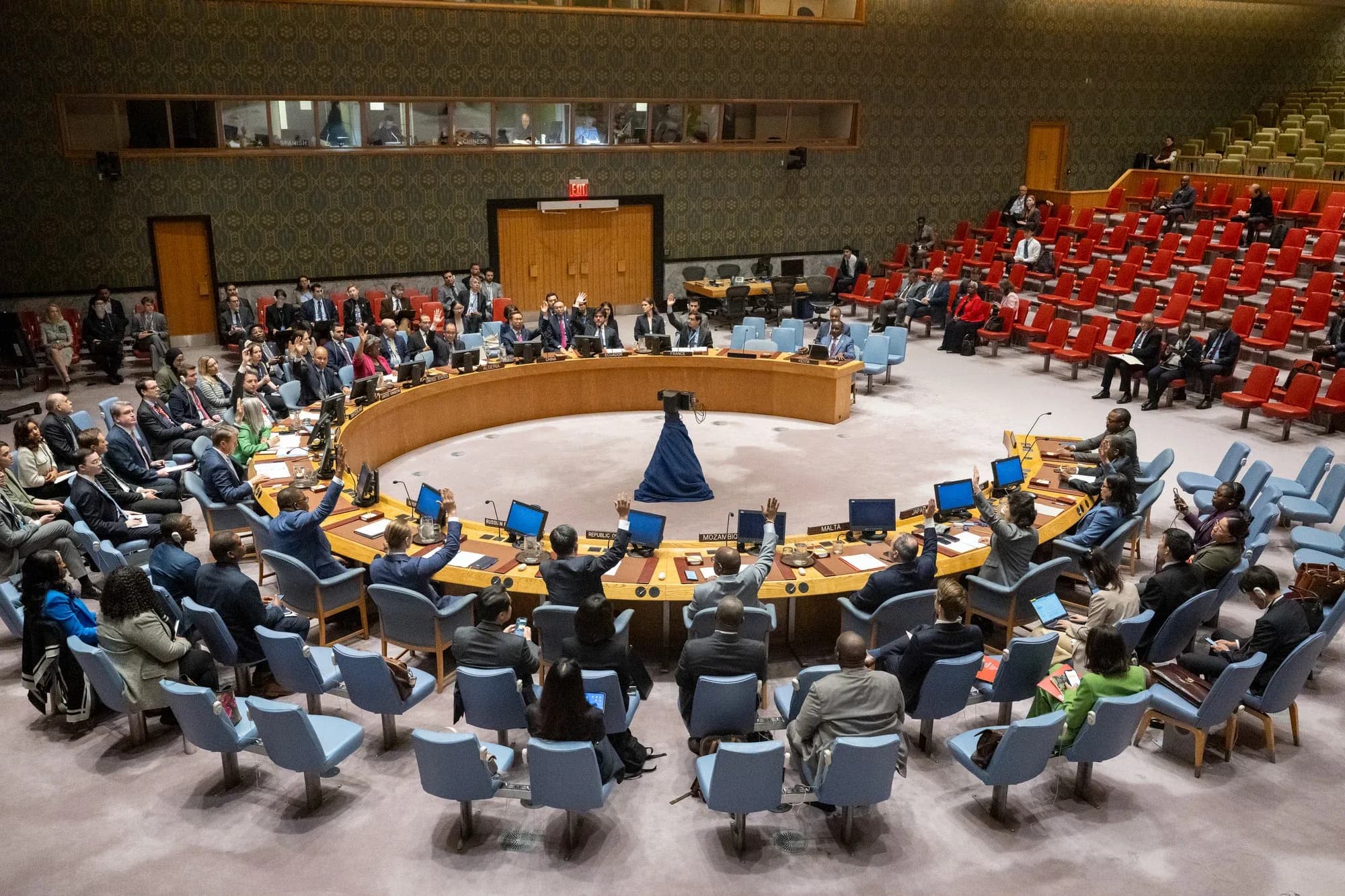
France has proposed voluntary restraint on the use of the UN Security Council (UNSC) veto in situations involving mass atrocities, rather than abolition of the veto. By September 2026, 128 UN member states had expressed support for the political declaration; the UK became the second P5 member after France to support the initiative.

What other approaches exist to reform the veto?
The debate extends beyond simply retaining or abolishing the veto.
- Voluntary restraint
- P5 voluntarily refrain from using the veto in specified situations.
- Example: France–Mexico initiative.
- Veto accountability
- Greater explanation and transparency regarding the reasons for exercising a veto.
- There are proposals for mechanisms requiring permanent members to justify their actions before the wider UN membership.
- Extending veto arrangements to new permanent members
- If the UNSC is expanded, an important question is whether new permanent members should receive veto powers.
- This creates a debate between greater representation and avoiding further veto-driven paralysis.
- Broader institutional reform
- Expansion of both permanent and non-permanent membership.
- Greater representation for Africa, Asia-Pacific and Latin America and the Caribbean.
- France itself supports expansion in both categories.
What are the key challenges to veto reform?
- Legal challenge
- The existing veto is embedded in the UN Charter framework.
- Formal abolition or fundamental alteration would require Charter reform.
- Political challenge
- The P5 have different strategic interests.
- Obtaining agreement among all five on restrictions to their own powers is difficult.
- Definitional challenge
- Determining when an event qualifies as “mass atrocities” can itself become politically contested.
- France's proposal identifies genocide, crimes against humanity and large-scale war crimes as the relevant categories.
- Implementation challenge: Voluntary commitments depend heavily on political willingness and peer pressure rather than a new binding enforcement mechanism.
Conclusion:
Completely abolishing the veto power is legally and politically impossible due to the structure of the UN Charter. However, incremental mechanisms such as voluntary restraint (French-Mexican proposal) and mandatory public justification in the UN General Assembly (Liechtenstein initiative) are crucial pragmatic steps toward holding powerful nations accountable.