Disaster Management | GS IV
Current Affairs
3 November 2026 5 min read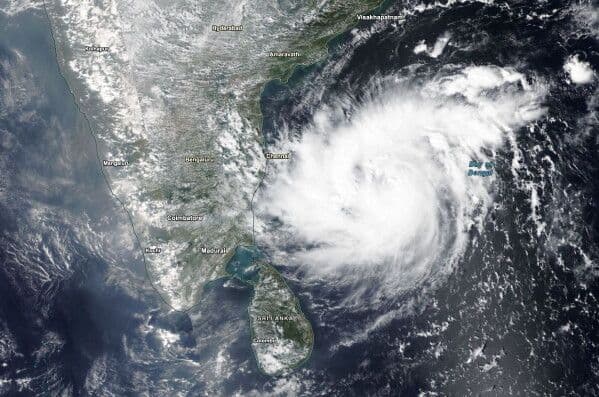
Cyclone Murasu made landfall along the coast of Andhra Pradesh on November 3, 2026, becoming the second cyclone to affect India's eastern coast within a week after Cyclone Arnab. The event required large-scale evacuations and highlighted the vulnerability of the Bay of Bengal coastline to tropical cyclones.
What is Cyclone Murasu?
- Cyclone Murasu is a severe cyclonic storm that developed over the Bay of Bengal.
- It crossed the coast of Andhra Pradesh between 3:30 AM and 5:30 AM on November 3, 2026.
- Wind speed during landfall: 100–110 kmph, with gusts reaching 120 kmph.
- Andhra Pradesh and Tamil Nadu were forecast to experience the major impacts.
- It was the second storm to hit the eastern coast within a week.

What is a Tropical Cyclone?
- A tropical cyclone is an intense low-pressure weather system that develops over warm tropical oceans and is characterised by strong winds, heavy rainfall and a spiral arrangement of clouds around a central region.
- Favourable conditions for formation:
- Warm ocean water (generally at least 26.5°C).
- Sufficient moisture in the middle atmosphere.
- Coriolis force to initiate rotation.
- Low vertical wind shear.
- A pre-existing low-pressure disturbance.
- Names for tropical cyclones over the North Indian Ocean are prepared under the World Meteorological Organization (WMO) and United Nations Economic and Social Commission for Asia and the Pacific (UN ESCAP) Panel on Tropical Cyclones.
- India had suggested a list of 13 names, which included Gati, Tej and Murasu.
- Names must meet certain conditions:
- Easy to pronounce.
- Maximum length of eight letters.
- Neutral in meaning and free from offensive or politically sensitive references.
- Murasu is a good example of how regional languages and cultural traditions find representation in international meteorological systems.
What are the major impacts of Cyclone Murasu?
- Coastal vulnerability: Strong winds and heavy rainfall threaten coastal settlements and infrastructure.
- Infrastructure damage: Trees and electricity poles were uprooted.
- Population displacement: Authorities planned to evacuate approximately 30,000 people in Andhra Pradesh.
- Livelihood disruption: Fishing and other coastal economic activities face disruption.
- Regional disaster risk: Andhra Pradesh and Tamil Nadu faced the highest forecast exposure.
What does the event indicate?
- The Bay of Bengal is an important tropical cyclone basin, exposing India's eastern coastline to recurring cyclone hazards.
- Advance forecasting and evacuation can reduce loss of life.
- Coastal disaster management requires coordination between meteorological agencies, State governments and local administrations.
- Cyclone resilience must include stronger coastal infrastructure, resilient power networks and community-level preparedness.
Conclusion:
Cyclone Murasu reinforces the importance of anticipatory disaster management along India's eastern coast. Timely warnings, advance evacuation, resilient infrastructure and strong local response mechanisms are essential to minimise cyclone-related losses.
#TropicalCyclone
#(WMO)
#(UN ESCAP)