Economy | GS II
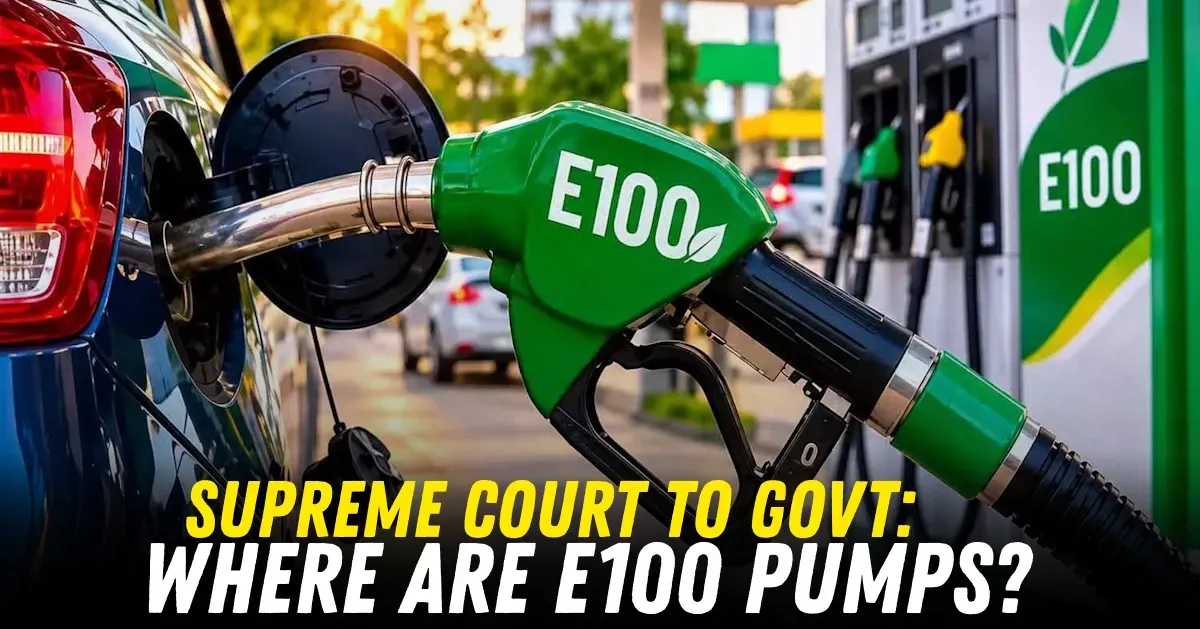
India has amended the Central Motor Vehicles Rules, 1989, to facilitate vehicles running on higher ethanol blends, including E85 and E100. The amendment supports the expansion of ethanol-based fuels beyond the existing E20 programme and creates a regulatory pathway for flex-fuel vehicles.
What are ethanol-blended fuels?
- Ethanol is an alcohol-based fuel produced through the fermentation of biomass such as sugarcane, maize and broken rice.
- It can be blended with petrol in different proportions.
Fuel typeCompositionE1010% ethanol + 90% petrolE2020% ethanol + 80% petrolE85Up to 85% ethanol + remaining petrolE100100% ethanol, subject to applicable fuel specifications

- E20 contains 20 litres of ethanol and 80 litres of petrol in every 100 litres of blended fuel.
What is a flex-fuel vehicle?
A flex-fuel vehicle (FFV) is designed to operate on petrol, ethanol blends of varying proportions or pure ethanol, depending on its approved specifications.
- Its engine and fuel system are designed to handle higher ethanol concentrations.
- It can adjust engine operation according to the fuel blend.
- It requires appropriate technical modifications compared with an ordinary petrol vehicle.
Why is India promoting ethanol blending?
- Reduce crude oil imports: Ethanol can replace a portion of imported petroleum-based fuel.
- Improve energy security: Domestic ethanol production can diversify India's transport-fuel supply.
- Support farmers: Creates demand for agricultural feedstocks such as sugarcane and maize.
- Reduce emissions: Ethanol blending can reduce certain tailpipe emissions, depending on the vehicle and fuel characteristics.
- Promote rural industry: Supports investment in ethanol distilleries and agricultural processing.
What has the government changed?
- The Ministry of Road Transport and Highways has amended the Central Motor Vehicles Rules, 1989.
- Key changes:
- E100 has been included in the relevant fuel specifications under Rule 115.
- The rules recognise fuels containing 100% ethanol, along with E85.
- E85 and E100 can be used in flex-fuel vehicles designed and approved for these fuels.
- Vehicles and their components must meet applicable emission, safety, and environmental standards before receiving approval for public-road use.
- The amendment also updates fuel classifications, including the reference to petrol blended with 20% ethanol (E20).
- It doesn't mean the existing vehicles must switch to E85 or E100
What are the concerns associated with higher ethanol blending?
- Vehicle compatibility
- Older vehicles may not be designed for high ethanol concentrations.
- Ethanol can affect certain rubber, plastic, and metal components in fuel systems.
- Using an incompatible fuel can increase maintenance costs and damage engine components.
- Lower fuel efficiency
- Ethanol has a lower energy density than petrol.
- Therefore, vehicles can deliver fewer kilometres per litre when running on higher ethanol blends.
- Consumers may experience a reduction in mileage.
- Water contamination and storage
- Ethanol has an affinity for water and can absorb moisture.
- Water contamination can affect fuel quality and storage.
- Higher ethanol blends require suitable storage tanks, transportation systems, and dispensing infrastructure.
- Food versus fuel competition
- Large-scale ethanol production requires agricultural feedstocks such as sugarcane and maize.
- Greater diversion of crops towards fuel production can increase pressure on agricultural land and water.
- It can also create competition between food production and energy requirements.
- Infrastructure requirements
- Separate or compatible storage and dispensing facilities are required for higher ethanol blends.
- Fuel stations, distribution networks, and vehicle servicing facilities need to adapt.
- Without adequate infrastructure, consumer adoption will remain limited.
Conclusion:
Ethanol blending can strengthen India's energy security and support agricultural incomes, but its success depends on vehicle compatibility, sustainable feedstock production, and adequate