Disaster Management | GS III
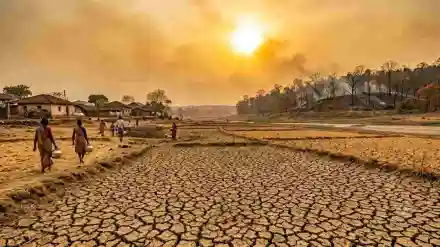
India could face an estimated 15,800 additional heat-related deaths between September 2026 and February 2027, according to a Climate Impact Lab assessment, as a strong El Niño coincides with a warmer climate. The country is also experiencing a rainfall deficit of around 15% below normal during the southwest monsoon withdrawal phase.

What is El Nino and Super El Nino?
- An ocean–atmosphere phenomenon characterised by abnormal warming of sea surface temperatures (SSTs) in the central and eastern equatorial Pacific Ocean (near Peru coast).
- It is the warm phase of the El Niño–Southern Oscillation (ENSO).
- El Niño: Warmer-than-normal SSTs
- La Niña: Cooler-than-normal SSTs
- Neutral: Near-average conditions
- Super El Nino is a stronger-than-normal El Niño event.
- El Niño doesn’t just change weather, it reorganises global climate systems
- Whereas, Super El Niño “supercharges” extremes.
- The current event is already producing different impacts across regions:
- Indonesia: wildfire conditions
- Parts of Central America: drought-related agricultural impacts
- India: heat stress and rainfall deficit
- Global: unusually high temperatures
- Forecasts cited in the report had indicated more than 90% probability of a very strong El Niño.
How does El Niño affect India?
- Pacific Ocean warming → changes in atmospheric circulation → altered monsoon dynamics → rainfall and temperature anomalies
- Its Indian impacts can include:
- Weak or deficient monsoon rainfall
- Higher temperatures
- Greater heat-stress conditions
- Agricultural and water stress
- Increased electricity demand for cooling
Why can this El Niño produce greater heat mortality?
- El Niño + Global Warming → Greater Heat Risk
- El Niño provides a natural climate variability signal that can raise temperatures.
- Long-term anthropogenic warming has already increased the baseline temperature.
- Therefore, an El Niño event occurring in a warmer climate can push temperatures to more dangerous levels.
- The Climate Impact Lab describes the current event as a “postcard from our future”, because its temperature conditions resemble what climate change is projected to produce more frequently in coming decades.

Conclusion:The projected impacts of a strong El Niño show how natural climate variability is increasingly interacting with anthropogenic warming. For India, this makes heat preparedness, climate-resilient health systems, reliable power and water management, and locally targeted adaptation increasingly important.