History & Culture | GS III
Khushbu Rajakbhai Darjada, a 15-year-old judoka from Gujarat’s Siddi community, won a silver medal in the girls’ 63 kg category at the 2026 Youth Olympic Games in Dakar, Senegal. She became the first Siddi athlete to win a Youth Olympics medal and only the second Indian judoka to do so. Her achievement has brought attention to the Siddis, an Indian tribal community of African origin.
Who are the Siddis?
- The Siddis are an Indian community whose ancestors came from Africa, particularly East Africa.
- They are an Indian tribal community with African ancestry, known for their distinct cultural and historical background.
- The Siddis of Gujarat are culturally integrated with the wider Kathiawadi society.
- They speak Gujarati, generally with a Kathiawadi accent.
- Their food habits, clothing, and everyday cultural practices are similar to those of other Gujarati communities.
- Siddi communities are also found in Maharashtra, Goa, Diu, and Daman.
- They are also known as Siddi Badshah, a name associated with their perceived carefree way of life.
- Constitutional and administrative status of the Siddis:
- The Central Government informed the Rajya Sabha in July 2025 that the Siddi population in Gujarat was 12,959, based on a community survey.
- Socio-economic conditions:
- Traditional occupations: Many work as agricultural and transport labourers, sailors, guards, watchmen, drivers, and forest guides.
- Education: Access to higher education is improving, but the number of families with members pursuing professional and advanced education remains limited.
- Employment opportunities: Members of the community are entering fields such as medicine and engineering, although these opportunities are not yet widespread.
- Sports participation: Several young people are selected for sports training programmes, but some discontinue due to difficulties in adapting to the discipline required for competitive sports.
- Many Siddis living near Gir National Park work as forest guides, drivers, and labourers in the national park and wildlife sanctuary.
How did people of African origin reach India?
There is no definitive historical record establishing exactly when and how the first Siddis arrived in India. Different historical accounts and community traditions offer different explanations.
Major explanations:
- Portuguese connection: One account suggests that Portuguese colonisers brought Africans to India, sometimes through enslavement, towards the end of the 17th century.
- Medieval migration: Another view suggests that invaders from Central and West Asia brought Africans to India through overland routes during the medieval period.
- Junagadh Nawabs: According to one community tradition, a Nawab of Junagadh brought African families to Gujarat to serve as strongmen, bodyguards, and caretakers of captive lions.
- Ratanpur tradition: Another account suggests that Siddis first settled in Ratanpur village in Bharuch district, Gujarat, and later moved to other parts of the state.
What are the religious and cultural traditions of the Siddis?
- Religious Beliefs:
- Most Siddis in Gujarat are Muslims.
- Their religious practices have strong Sufi influences.
- Some elements and rituals of the Hindu religious traditions of Saurashtra are also present in their belief system.
- Baba Gor, a 15th–16th-century African Muslim saint, is an important figure of reverence.
- Dargahs dedicated to Baba Gor are found in Ratanpur, Jambur, Rajkot, Ahmedabad and Jamnagar.
- Annual Urs celebrations are organised at these shrines.
- Dhamal:
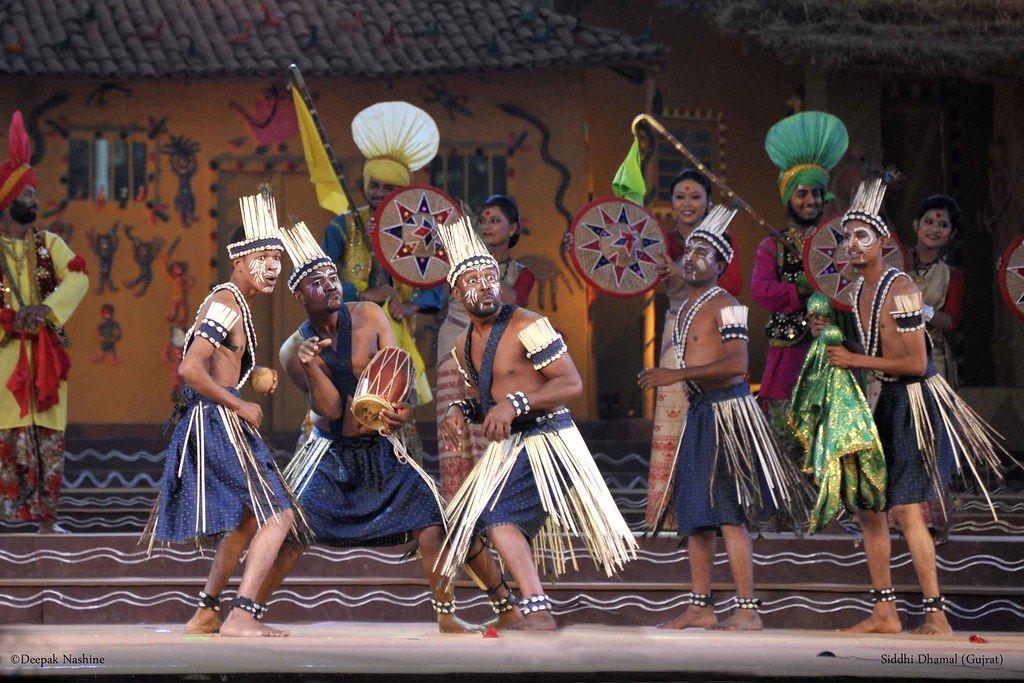
- Dhamal is a traditional folk dance associated with the Siddi community and believed to have African origins.
- It is dedicated to Baba Gor.
- It is generally performed by groups of 8–10 male dancers.
- Dancers wear costumes made from animal skin and feathered headgear.
- Performances use large and small drums and imitate animal movements and sounds, including those of tigers, deer, and goats.
- Women participate in other forms of Siddi dance, but the traditional Dhamal performance described in the source is performed by men.
Conclusion:
The Siddi community represents India's long history of migration, cultural interaction and social integration. Its progress requires equal access to education, employment and sports, along with the protection of its distinctive cultural heritage