History & Culture | GS I
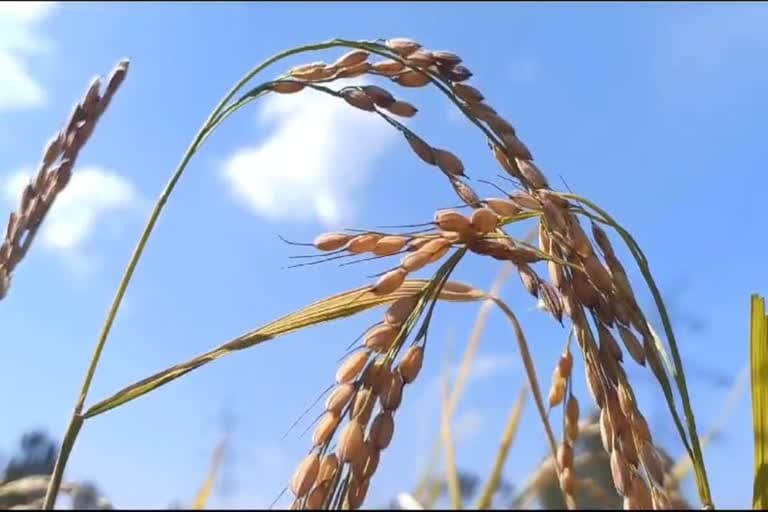
Kashmir’s GI-tagged aromatic Mushk Budji rice, once pushed to the brink of extinction by disease and declining cultivation, is witnessing a revival. However, the recent expansion in production has created a new challenge: weak demand, inadequate marketing and post-harvest/milling constraints are leaving farmers with unsold stocks.

What makes Mushk Budji special?
- Mushk Budji is an indigenous, short-grained aromatic rice landrace of the Kashmir Valley.
- It is traditionally cultivated in the higher reaches of Kashmir, particularly the Sagam–Kokernag belt of Anantnag.
- Grows at roughly 1,600–1,900 m altitude under specific cool climatic conditions.
- Known for:
- It is particularly valued in Wazwan, Kashmir’s traditional cuisine.
- Received a Geographical Indication (GI) tag in 2023.
Why had Mushk Budji almost disappeared?
Rice blast disease → crop losses → declining cultivation → loss of farmer interest → risk of extinction
- The variety is highly susceptible to rice blast, a fungal disease caused by Magnaporthe oryzae.
- Blast outbreaks became a major problem from the 1960s, while cultivation declined sharply from the 1980s and reached a low point around 2000.
- Disease could cause substantial yield losses; earlier research reported losses of around 70% under severe blast pressure.
- Other factors behind the decline:
How was the traditional variety revived?
Scientific intervention + farmer participation
- SKUAST-Kashmir initiated a revival programme in 2007.
- Scientists used marker-assisted selection/marker-assisted breeding to introduce resistance to rice blast while retaining the characteristic genetic background, aroma and identity of Mushk Budji.
- Resistance genes including Pi54, Pi1 and Pita were incorporated into the Mushk Budji background.
- This represents an important example of modern plant breeding being used for conservation of a traditional landrace rather than replacing it with a modern variety.
Revival outcome
- Cultivation expanded from about 250 ha in 2022–23 to an estimated 1,000 ha by 2025.
- Production increased from roughly 600 tonnes to a projected 2,500 tonnes over the same period.
Why is increased production not automatically translating into higher farmer incomes?
- Limited consumer base: Mushk Budji commands a premium price, restricting mass consumption and making market expansion difficult. Earlier estimates indicated prices several times higher than common rice varieties.
- Weak market linkages: Increased production has not been matched by adequate aggregation, branding, distribution and access to wider markets.
- Processing bottleneck: Local milling can result in a high proportion of broken grains, reducing the commercial and aesthetic value of the premium rice.
- Shorter shelf life of milled rice: The characteristic aroma can diminish during storage, adding to post-harvest management challenges.
- GI tag ≠ guaranteed market: Geographical indication provides legal identity and helps protect the product's reputation, but does not by itself create demand, branding, processing capacity or remunerative market access.
- Scale–premium paradox: Expanding production is desirable for farmer incomes, but excessive supply without corresponding demand can depress prices or leave stocks unsold.
What is the larger significance for agriculture?
- Mushk Budji demonstrates that agricultural biodiversity can become an economic asset when traditional varieties are combined with scientific improvement, GI protection and value-chain development.
- It offers a pathway towards high-value, speciality agriculture, rather than competing only in the low-margin commodity rice market.
- Indigenous crop varieties can provide localised livelihood opportunities, food-cultural continuity and genetic resources for future crop improvement.
- The case also highlights an important policy lesson: revival of a traditional crop must encompass the entire value chain — seed → cultivation → processing → branding → market → export — rather than stopping at production.
How can the “problem of plenty” be converted into a market opportunity?
- Build a speciality-rice brand: Position Mushk Budji as a premium Kashmiri heritage product rather than a substitute for ordinary rice.
- Strengthen GI-based branding: Use GI identity for traceability, authentication and premium positioning while preventing misleading marketing.
- Upgrade milling and post-harvest infrastructure: Establish specialised processing facilities to minimise grain breakage and preserve aroma.
- Develop producer collectives/FPOs: Aggregate small farmer output, improve bargaining power and enable bulk marketing.
- Expand institutional demand: Promote its use in Kashmiri cuisine, hospitality, tourism and curated food markets.
- Target niche export markets: Build demand among Indian diaspora, premium-food consumers and speciality-rice markets rather than attempting immediate mass-market competition.
- Link production expansion with assured markets: Cultivation should expand in line with credible demand projections, preventing another cycle of farmer distress caused by overproduction.
- Maintain genetic and cultural authenticity: Scientific improvement should preserve the distinctive characteristics that make Mushk Budji commercially valuable in the first place.
Conclusion:
Mushk Budji illustrates the next frontier of conserving traditional agriculture: not merely saving a disappearing variety, but making its cultivation economically sustainable. The success of its revival will ultimately depend on converting its GI status, unique terroir, cultural identity and scientific resilience into a complete premium value chain that delivers stable returns to farmers.