Disaster Management | GS II
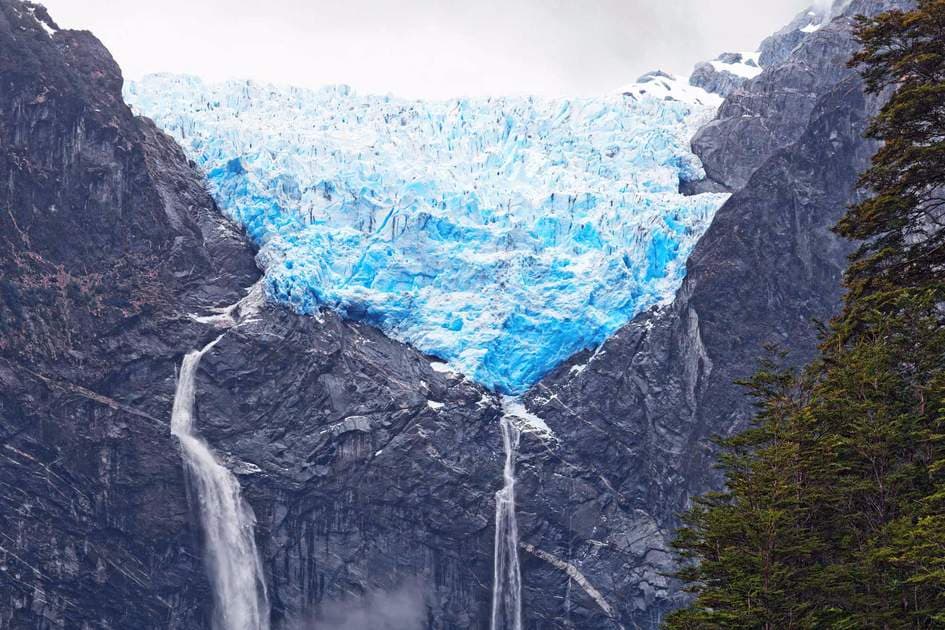
An April 2026 study published in Nature identified 219 hanging glaciers in the Alaknanda basin of the Garhwal Himalayas, highlighting the growing risk of glacier-related cascading hazards in a warming Himalayan region.

What are hanging glaciers?
- Ice masses perched on steep mountain slopes that can become unstable and detach, potentially triggering large avalanches.
- They can develop when Himalayan glaciers experience rapid changes in ice movement, geometry and dynamic instability, associated with rapid warming and climate variability.
- Their instability can cause portions of the ice mass to detach suddenly, generating high-energy ice avalanches.
- Unlike conventional valley glaciers that occupy relatively stable valleys, hanging glaciers are particularly hazardous because of their steep position and potential for sudden break-off.
- According to the study,
- 219 hanging glaciers were identified in the Alaknanda Basin of the Garhwal Himalayas.
- These hanging glaciers covered an area of 71.7 ± 3.5 sq km.
- The estimated total ice volume was 2.39 ± 0.42 km³.
- The estimated hanging ice mass was 0.74 ± 0.14 km³.
- Nearly one-third of the unstable ice was concentrated in the Upper Alaknanda Basin.
- Simulations indicated that avalanche flows in the Badrinath–Mana sector of Uttarakhand could exceed 50 metres in height.
Why are hanging glaciers forming?
- Rising temperatures: accelerated melting and thinning of glacier ice.
- Changing precipitation patterns altered snowfall and rainfall regimes affecting glacier stability.
- Glacier velocity changes: rapid changes in ice movement can redistribute ice and alter glacier geometry.
- Freeze–thaw processes: repeated freezing and thawing can weaken surrounding rock and ice interfaces.
- Permafrost degradation: warming of previously frozen ground can reduce slope stability.
How does the hazard develop?
Rapid warming + climate variability
↓
Glacier instability
↓
Redistribution and structural changes in ice
↓
Formation of unstable ice masses on steep slopes
↓
Glacier break-off
↓
Ice/rock avalanche (Rapid downslope movement of large quantities of glacier ice)
↓
Downstream cascading hazards (One hazard triggering another, e.g. glacier break-off → avalanche → river blockage → flood )
Why are hanging glaciers dangerous?
- Glacier break-offs: An unstable hanging glacier can detach from a steep slope and generate a large ice avalanche.
- Cascading hazards:
A break-off can trigger secondary hazards, including: - Ice/rock avalanches
- Sudden river blockage and release
- Glacial Lake Outburst Floods (GLOFs)
- Flash floods
- Debris flows
- Thus, Himalayan hazards should not be viewed as isolated events.
- Growing exposure: The study projects that by 2030, the building and infrastructure area exposed to avalanche-related risks in the basin could be 120% higher than in 2000, while the population living in exposed areas could increase by 17%.
Why is this important for India?
- The Alaknanda basin contains important settlements and infrastructure, including hydropower and transport infrastructure.
- The risk is therefore not simply a climate-change issue; it is also a question of:
Cryosphere + Disaster Management + Infrastructure Planning + Climate Adaptation - The study calls for systematic identification and monitoring of high-risk glaciers and risk-informed land-use planning in mountain regions.
What should India do?
- Systematically inventory and monitor hanging glaciers using satellite imagery, remote sensing, drones and ground-based observations.
- Establish early-warning systems for ice/rock avalanches and cascading floods.
- Integrate glacier, seismic, meteorological and hydrological monitoring rather than treating each hazard separately.
- Undertake risk-informed land-use planning in vulnerable Himalayan valleys.
- Incorporate cryospheric risks into planning of hydropower, roads, tourism and settlements.
- Strengthen India–Nepal–China transboundary information sharing, since mountain hazards can rapidly cross administrative and national boundaries.
Conclusion:
The emergence of hanging glaciers shows that Himalayan climate risks are becoming cascading rather than isolated. India must shift from post-disaster response to anticipatory risk management through cryosphere monitoring, early warnings and risk-sensitive Himalayan development.