Science & Technology | GS II
Current Affairs
5 October 2026 5 min read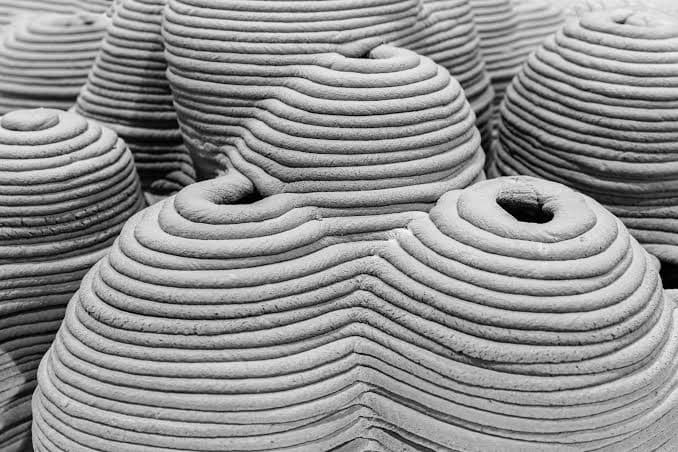
Andhra Pradesh is launching a national-level pilot to construct houses using 3D Concrete Printing (3DCP) under the Pradhan Mantri Awaas Yojana–Gramin (PMAY-G). The pilot will begin with 177 housing units in Guntur district.

What is 3D Concrete Printing?
- It is an additive manufacturing technique in which a computer-controlled printer deposits specially formulated concrete or cementitious material layer by layer to create a structure, unlike conventional construction:
- Conventional: Bricks/blocks + mortar + sequential manual labour
- 3DCP: Digital design → robotic printer → layer-by-layer material deposition
- Process: The process broadly involves:
- Digital design → BIM model → Computer-controlled printer → Material extrusion → Layer-by-layer construction → Completed structure
- The printer translates the BIM design into physical layers.
- How does it work?
- A robotic printer moves along programmed paths and extrudes specially formulated cementitious material through a nozzle.
- The material must have a carefully controlled:
- Thus, 3DCP is not simply conventional concrete being printed; it requires materials specifically designed for additive manufacturing.
- International applications:
- Dubai – large-scale construction 3D printing.
- ICON, Texas – advanced 3D-printing applications.
- Miyagi Prefecture, Japan – structures designed to comply with seismic requirements.
Why is 3D printing different from conventional construction?
- Reduced manual labour: The printer automates much of the wall-building process.
- Faster construction: Multiple layers can be deposited continuously without waiting for conventional masonry operations.
- Design flexibility: Digital fabrication allows complex shapes and customised structures.
- Material efficiency: Precise deposition can reduce unnecessary material use compared with some conventional construction methods.
- Reduced dependence on sequential masonry: The technology can integrate automation into activities traditionally performed manually.
Conclusion:
3D concrete printing can help India move from labour-intensive construction towards faster, digitally controlled and technology-driven affordable housing.
#3D Concrete Printing
#Material efficiency
#BIMmodel