Economy | GS III
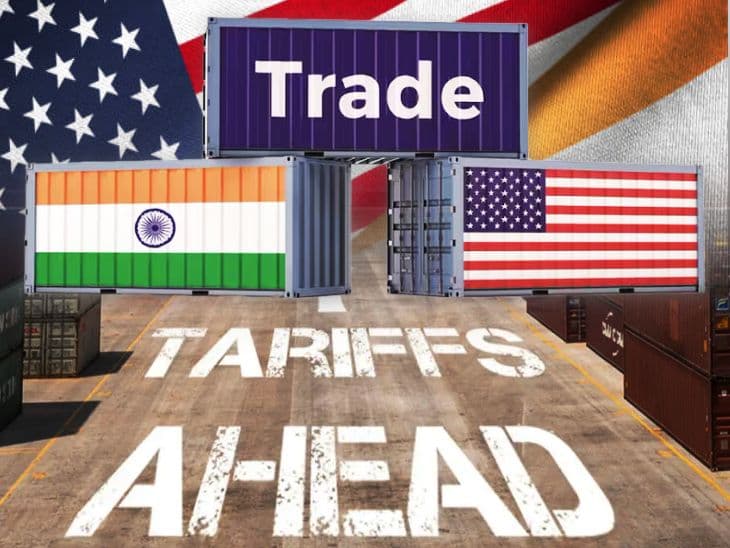
The U.S. Lindsay O. Graham Sanctioning Russia and Iran Act, 2026 proposes additional tariffs and restrictions on countries purchasing Russian crude and natural gas. The proposed framework could expose India to very high cumulative U.S. tariffs, given its continued imports of Russian crude.
What is the economic significance of tariffs?
- A tariff is a tax imposed on imported goods.
- In India’s case, a high U.S. tariff on Indian exports can:
- Higher tariff → Higher landed price → Lower competitiveness → Lower U.S. demand → Lower Indian exports → Lower production and employment
- The impact is particularly significant when the U.S. is an important destination for Indian exports.

Why does India continue importing Russian crude?
- India has diversified its crude suppliers to improve energy security and reduce dependence on any single source.
- Russian crude accounted for only about 2% of India’s crude imports before the Russia–Ukraine conflict.
- It subsequently rose to roughly half of India’s crude imports.
- In 2026, Russian crude imports increased from 4.54 MMT in January to 8.96 MMT in May.
- Thus, India faces a trade-off: Cheaper/diversified energy supplies ↔ Exposure to geopolitical and tariff risks.
What is the immediate tariff risk for India?
- The U.S. had already imposed an additional 10% tariff on Indian goods under Section 301 of the Trade Act, 1974, replacing the earlier 10% duty under Section 122.
- The proposed sanctions legislation could impose tariffs of up to 100% on countries purchasing Russian crude or natural gas.
- If applied to India, the cumulative tariff could reach around 110%.
- Such tariffs could reduce the price competitiveness of Indian exports in the U.S. market, increasing pressure on India's external sector.
Why is India vulnerable to U.S. tariff shocks?
Structural factors
- Concentration of export markets
- The U.S. remains one of India's largest export destinations.
- Heavy dependence on a major market increases vulnerability to unilateral tariff changes.
- Dependence on Russian energy
- India’s increased Russian crude purchases have strengthened energy-security gains but created geopolitical exposure.
- Sanctions or secondary tariffs can convert an energy-import strategy into a trade-policy vulnerability.
- Limited export-market diversification
- Alternative markets cannot automatically absorb Indian exports displaced from the U.S.
- Diversification requires market access, competitive products and sufficient
- Non-tariff barriers: Even where tariffs are reduced through FTAs, standards, certification, logistics and regulatory requirements can restrict market access.
- Competitiveness constraints: High logistics costs, regulatory complexity and inadequate standards can reduce India's ability to rapidly redirect exports.
- Import dependence and external vulnerability:
- India simultaneously faces exposure through both energy imports and merchandise exports.
- A shock affecting the external sector can therefore operate through multiple channels.
Cyclical factors
- Global demand fluctuations: Weak global demand can limit the ability of alternative markets to absorb additional Indian exports.
- Exchange-rate movements: Currency movements can alter the competitiveness and domestic cost of traded goods.
- Geopolitical disruptions: Wars, sanctions and shipping disruptions can suddenly change:
- energy prices
- freight costs
- trade routes
- availability of key imports.
- Tariff escalation: A prolonged tariff confrontation can simultaneously reduce exports, production and domestic demand.
How can India reduce its exposure to tariff risks?
Incremental measures
- Diversify export destinations
- Expand exports to the EU and other alternative markets.
- Deepen trade relations with emerging markets.
- Make FTAs commercially effective: Focus not only on tariff reductions but also on:
- Standards
- Customs procedures
- Rules of origin
- Services
- Logistics
- Dispute settlement
- Reduce logistics costs
- Improve ports, multimodal transport and customs systems.
- Faster and cheaper movement can make Indian exports competitive in distant markets.
- Address non-tariff barriers
- Harmonise standards.
- Improve testing and certification infrastructure.
- Help MSMEs comply with foreign-market regulations.
- Move up the value chain
- Increase the share of higher-value manufactured and processed products.
- Reduce dependence on low-value, price-sensitive exports.
Disruptive measures
- Build a diversified trade portfolio:
- India should avoid replacing U.S. dependence with dependence on another single market.
- Multiple markets + multiple products + multiple supply chains = greater external-sector resilience.
- Combine energy diversification with diplomatic diversification
- Continue diversifying crude and gas sources.
- Simultaneously maintain diplomatic engagement with major trading partners.
- Energy security should not create excessive exposure to one geopolitical relationship.
- Build globally competitive manufacturing:
- Infrastructure → Competitive manufacturing → Export capacity → Market diversification → Resilience
- Strong domestic production capacity allows India to redirect exports when one market becomes restrictive.
- Strengthen domestic demand as a shock absorber: A stronger domestic market can partially cushion firms when external demand weakens.
- Pursue trade diversification alongside domestic reforms as trade agreements alone cannot generate exports.
Conclusion:
India’s external resilience requires more than reducing dependence on one trading partner. Diversified markets, competitive manufacturing, stronger FTAs and lower trade costs can convert geopolitical trade shocks into manageable rather than systemic economic disruptions.