Economy | GS III
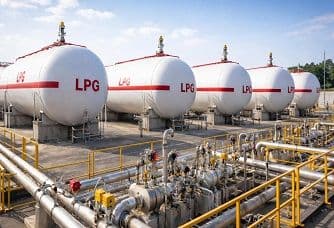
The Strait of Hormuz crisis has disrupted India's traditional LPG supply routes from West Asia. India is becoming dependent on the United States for LPG imports, with the U.S. reportedly supplying around two-thirds of India’s LPG imports during the recent disruption in West Asian supplies. This represents a major diversification away from West Asian suppliers, but it also creates a new concentration risk.
Why does India import LPG?
• India is the world’s second-largest LPG importer.
• India's domestic LPG production has remained relatively stagnant while consumption has continued to rise.
• Domestic LPG production: around 4.3 MMT
• Consumption in the first quarter of FY27: around 6.5 MMT
• Domestic active LPG customers: about 33.14 crore
• LPG consumption is estimated at around 34.69 MMT in FY2026-27.
• India imports around 60% of its LPG from the Gulf region, with nearly 90% of these supplies traditionally passing through the Strait of Hormuz.
• Around 67% of India's LPG imports were reported to have come from the U.S.
• India has simultaneously diversified supplies from countries including Russia, Venezuela, Myanmar, Libya, Sudan and Afghanistan.
• According to Vortexa, India's LPG imports from West Asia fell by almost 85% between February and June, while imports from other countries, including the U.S., increased.
• U.S. LPG imports reached 0.77 million metric tonnes in June.
• Therefore, Rising consumption + stagnant domestic production = increasing import dependence.
What makes the U.S. LPG attractive to India?
• The U.S. offers India an alternative source outside the Hormuz-dependent Gulf route.
• Strategic advantage
• U.S. Gulf Coast → Indian ports
▪ U.S. LPG is based on Mont Belvieu propane prices, while West Asian LPG is linked to
Saudi Aramco CP.
▪ Australia also offers a potential alternative because it lies in the Indo-Pacific and outside
the Hormuz route, although its export volumes are much smaller.
• This reduces India's direct exposure to the Strait of Hormuz.
• However, the geographical advantage comes with a trade-off.
• West Asia
• Shorter shipping distance
• Lower freight costs
• Established supply chains
• U.S.
• Longer shipping route
• Higher freight costs
• Greater exposure to global freight and dollar movements
• But lower geopolitical dependence on Hormuz
• Hence, the cheapest source is not necessarily the most strategically secure source.
What are the risks of LPG overdependence?
• Supplier concentration risk: Dependence on any single supplier creates vulnerability.
• Today: West Asian dependence ↓ but: U.S. dependence ↑
• This is not complete energy diversification.
• Geopolitical risk: U.S. energy exports are influenced by U.S. foreign policy, sanctions,
trade policy, tariffs, geopolitical tensions.
• The Lindsey O. Graham Sanctions Russia and Iran Act of 2026, for
instance, proposes tariffs of up to 100% on top five buyers of Russian oiland natural gas, creating an additional risk for India's energy imports.
• Therefore, India must avoid replacing geographical dependence with geopolitical dependence.
• Strait of Hormuz risk: India's traditional Gulf supply chain remains vulnerable to conflict; maritime blockade; attacks on shipping; insurance disruptions; and sudden freight increases.
• Price risk: Imported LPG prices are influenced by Global LPG price + freight +insurance +exchange rate.
• A depreciation of the rupee increases the domestic cost of imported LPG.
• Thus: Global price rise + rupee depreciation = higher import bill
• Shipping and distance:
• U.S. LPG travels a much longer distance to India.
▪ U.S. shipments: around 25–35 days
▪ Gulf shipments: around 5–10 days
• Therefore, even if the U.S. LPG is cheaper at the production point, the
advantage can diminish because of freight and shipping costs.
• Fiscal burden: India has historically used subsidies and public-sector oil marketing companies to keep LPG affordable.
• When international prices rise sharply, under-recoveries can increase.
• The accumulated under-recoveries of public-sector OMCs is around ₹59,000 crore as of July 31 this year.
• This creates a three-way policy challenge: Consumer affordability ↔ OMC financial health ↔ Fiscal sustainability
How can India make LPG security more resilient?
• Strengthen domestic LPG production to reduce the gap between consumption and
production.
• Diversify supplier countries and supply routes rather than replacing one
concentrated dependence with another.
• Build strategic LPG reserves to provide a buffer during geopolitical and shipping
disruptions.
• Explore alternatives such as Australia, which is outside the Strait of Hormuz, while
recognising its smaller export capacity.
Conclusion: India should not replace dependence on West Asia with dependence on the U.S.; it should build a diversified LPG ecosystem backed by domestic production, strategic reserves and multiple supply routes.