History & Culture | GS I
Current Affairs
17 July 2026 5 min read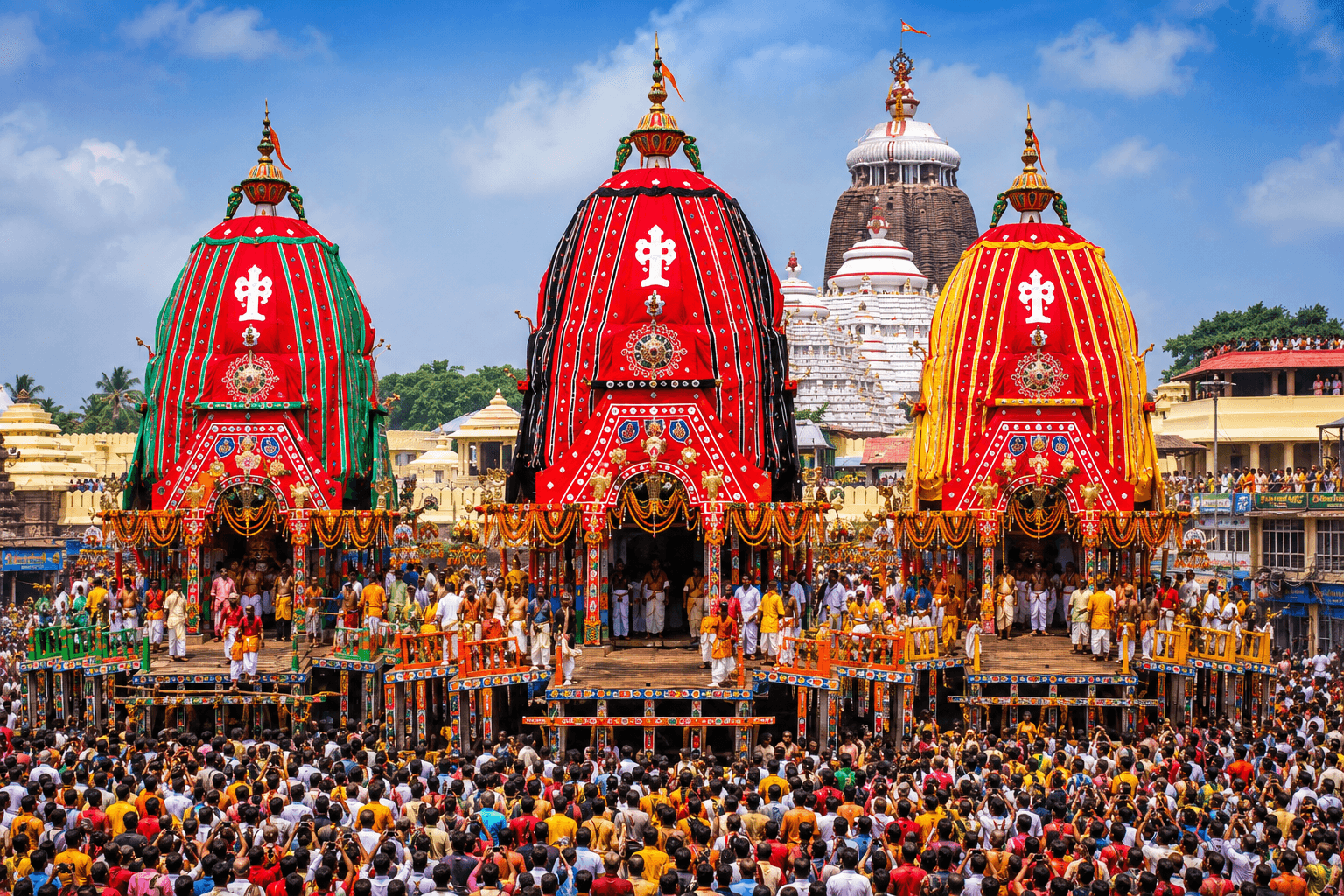
The world-famous Rath Yatra of Lord Jagannath, Lord Balabhadra, and Devi Subhadra commenced on 16 July from the Shree Jagannath Temple, Puri (Odisha).
What is Jagannath Rath Yatra?
- An annual chariot festival celebrated in Puri, Odisha.
- It is observed on the Dwitiya (2nd day) of the Shukla Paksha in the month of Ashadha (June–July).
- During the festival, Lord Jagannath, Lord Balabhadra, and Devi Subhadra leave the sanctum of the Jagannath Temple to give darshan to devotees from their chariots.
- The procession begins from the Shree Jagannath Temple and covers nearly 3 km to the Shree Gundicha Temple, traditionally regarded as the maternal aunt's abode (Mausi Bari) of Lord Jagannath.
- After staying at the Gundicha Temple for nine days, the deities return to the Jagannath Temple during the Bahuda Yatra (Return Car Festival).
- The Three Chariots
Deity Chariot Distinctive Colours Wheels
Lord Jagannath Nandighosha Red & Yellow 16
Lord Balabhadra Taladhwaja Red & Green 14
Devi Subhadra Darpadalana
(Devadalana) Red & Black 12
• Unique Feature: Fresh wooden chariots are constructed every year using prescribed sacred timber and traditional techniques.
Major Rituals Associated with Rath Yatra
• Snana Purnima: The deities are ceremonially bathed with 108 pots of sacred water.
• Anasara: Following the ceremonial bath, the deities are believed to fall ill and remain away from public view for about 15 days.
• Netrotsava (Nava Jaubana Darshan): The deities reappear before devotees after recovery, marking the first public darshan before the Rath Yatra.
• Rath Yatra: The three deities travel in separate chariots from the Jagannath Temple to the Gundicha Temple.
• Hera Panchami: Goddess Lakshmi symbolically visits the Gundicha Temple in search of Lord Jagannath.
• Bahuda Yatra: The return procession from the Gundicha Temple to the Jagannath Temple.
• Suna Besha: The deities are adorned with magnificent gold ornaments while seated on their chariots.
• Niladri Bije: The ceremonial re-entry of the deities into the Jagannath Temple.
What is the cultural significance of Rath Yathra?
• Symbol of Inclusiveness: The deities come out of the sanctum to give darshan to all devotees, irrespective of caste, creed, or nationality.
• Living Intangible Heritage: Preserves centuries-old ritual traditions performed by hereditary Sevayats (temple servitors).
• Syncretic Tradition: The Jagannath cult reflects the assimilation of: Tribal traditions
Vaishnavism
Shaivism
Shaktism
Buddhist influences
• Symbol of Equality: During Chhera Pahanra, the Gajapati King of Puri ceremonially sweeps the chariots with a golden broom, signifying that everyone is equal before the divine.
Jagannath Temple
• Located at Puri, Odisha.
• Built in the 12th century CE by Anantavarman Chodaganga Deva of the Eastern Ganga Dynasty.
• Constructed in the Kalinga (Rekha Deula) style of architecture.
• One of the CharDham pilgrimage sites of Hinduism.
Conclusion:
The Jagannath Rath Yatra is far more than a religious procession, it is a living symbol of India's civilisational continuity, embodying devotion, inclusiveness, craftsmanship, and community participation. Its enduring legacy highlights the importance of preserving both tangible and intangible cultural heritage for future generations.
#JagannathRathYatra
#Puri
#Odisha
#Tribaltraditions