Polity & Governance | GS II
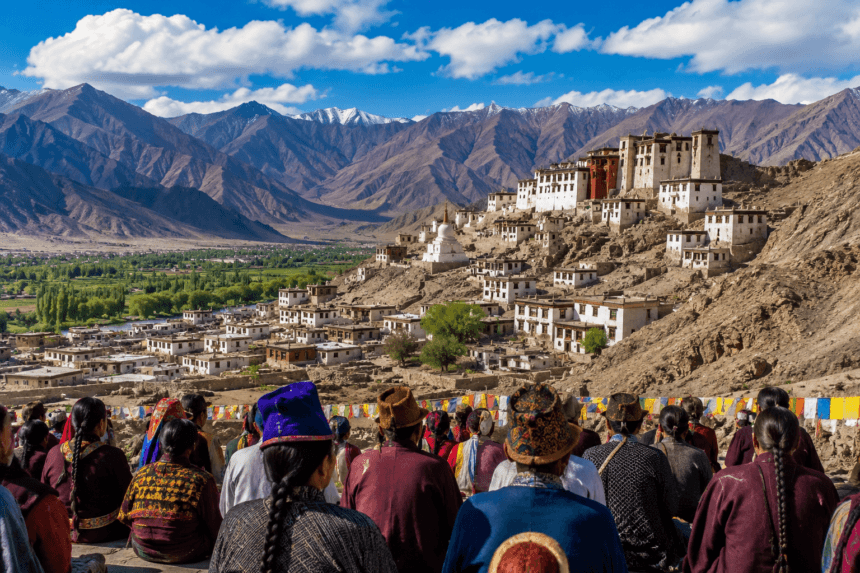
The Ladakh Administration has announced the creation of 17 new tehsils and stated that the Ladakh Autonomous Hill Development Council (LAHDC) Act will be extended to all seven districts of the Union Territory.
Why is Ladakh seeking institutional safeguards?
- Following the Jammu & Kashmir Reorganisation Act, 2019, Ladakh became a Union Territory without a legislature.
- It is administered by:
- Unlike Delhi and Puducherry, Ladakh has no elected legislature, making local self-governance institutions particularly important.
- Since then, local groups have demanded:
What are the Ladakh Autonomous Hill Development Councils (LAHDCs)?
- The LAHDCs are statutory local self-government institutions created to promote decentralised governance in the tribal and geographically remote regions of Ladakh.
- Presently, two councils exist:
- They perform functions relating to:
- They function alongside the Union Territory Administration and bridge governance between the local population and the UT administration.
Why are LAHDCs important after 2019?
- Following the removal of the Legislative Assembly, LAHDCs have become the primary elected institutions representing local aspirations in Ladakh.
- Recognising the need to strengthen decentralised governance after 2019, the Ladakh Administration has proposed extending the LAHDC framework to all seven districts through appropriate legal provisions.
- At the same time, discussions between the Centre and Ladakh stakeholders continue on providing constitutional safeguards for protecting land, employment, tribal identity and culture.
- Among the proposals under consideration is a Ladakh-specific model under Article 371, while several civil society organisations continue to demand inclusion under the Sixth Schedule, which provides Autonomous District Councils with greater legislative and administrative autonomy in notified tribal areas.
- Together, these discussions reflect two complementary dimensions of governance reform in Ladakh:
Article 371 and Articles 371A–371J provide asymmetric constitutional arrangements for certain States based on their historical, cultural or developmental needs.Depending on the State, these provisions may protect:Land ownershipLocal employmentTraditional institutionsAdministrative autonomyRegional developmentA customised Article 371 framework is being explored for Ladakh.
What is the recent announcement?
The Administration has announced:
- Creation of 17 new tehsils, increasing the total to 32 tehsils.
- Extension of the LAHDC framework to all seven districts through suitable legal provisions.
- Appointment of tehsildars in newly created tehsils.
- Creation of new divisions in:
- Strengthening recruitment and decentralised administration.